Email
Email Google Scholar
 GitHub
 X
X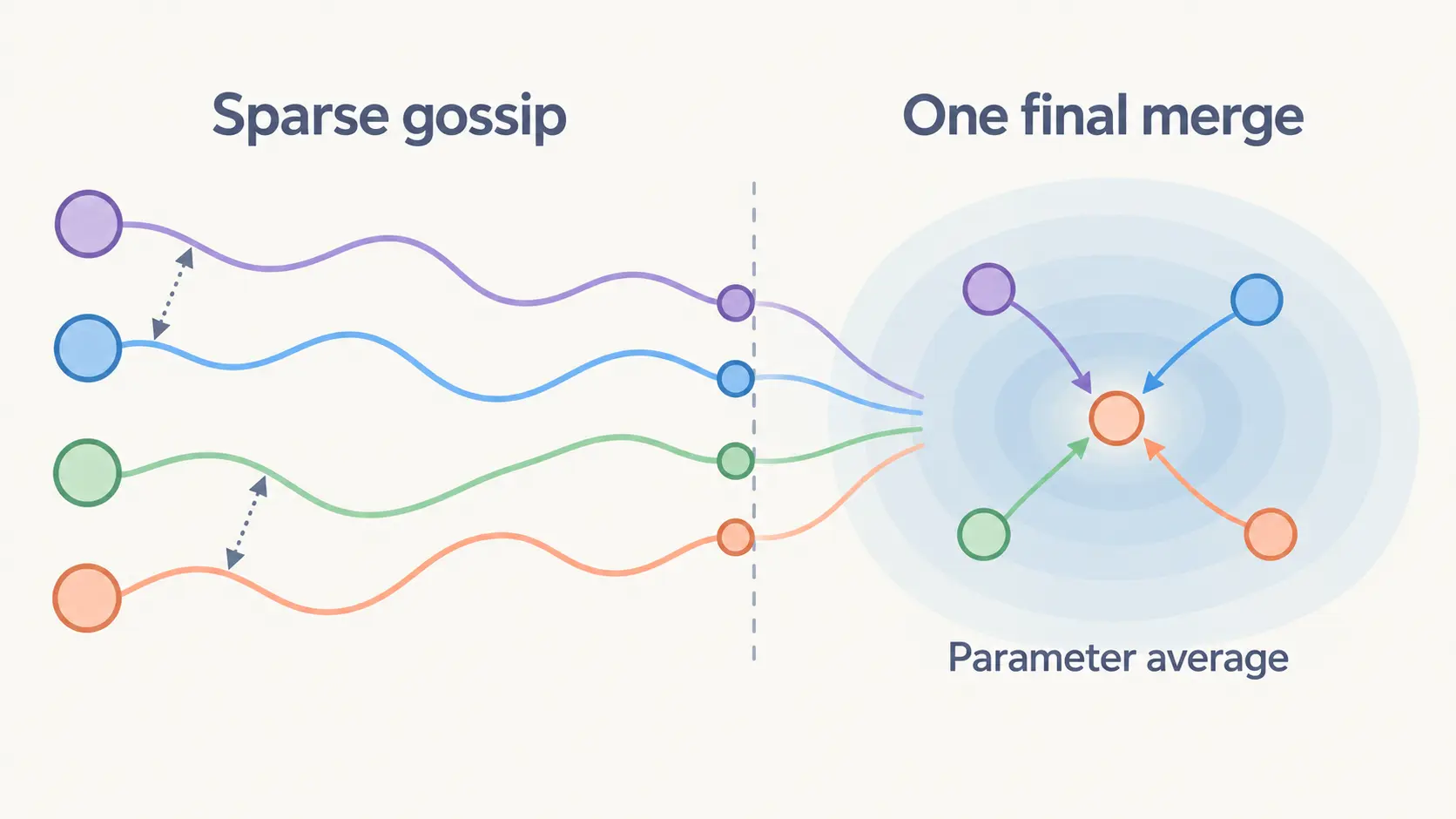
01ICLR 2026Oral
On the Surprising Effectiveness of a Single Global Merging in Decentralized Learning
A single global model merging can be remarkably effective in decentralized learning, challenging conventional wisdom about frequent communication.
I am a Ph.D. candidate at the Computer Science Department of Zhejiang University (ZJU), advised by Professors Can Wang and Chun Chen.
My research focuses on understanding learning mechanisms.

Research area
Exploring new ways to train language models (and beyond), rethinking how learning signals are generated and parameters are updated.
Research area
Understanding learning in distributed systems, including training dynamics, generalization, data influence, and communication allocation.
Research area
Studying learning mechanisms, such as training dynamics / implicit bias, symmetries, and emergence of mergeability.
Publications
My research is my brand; papers are my products.
01ICLR 2026Oral
A single global model merging can be remarkably effective in decentralized learning, challenging conventional wisdom about frequent communication.
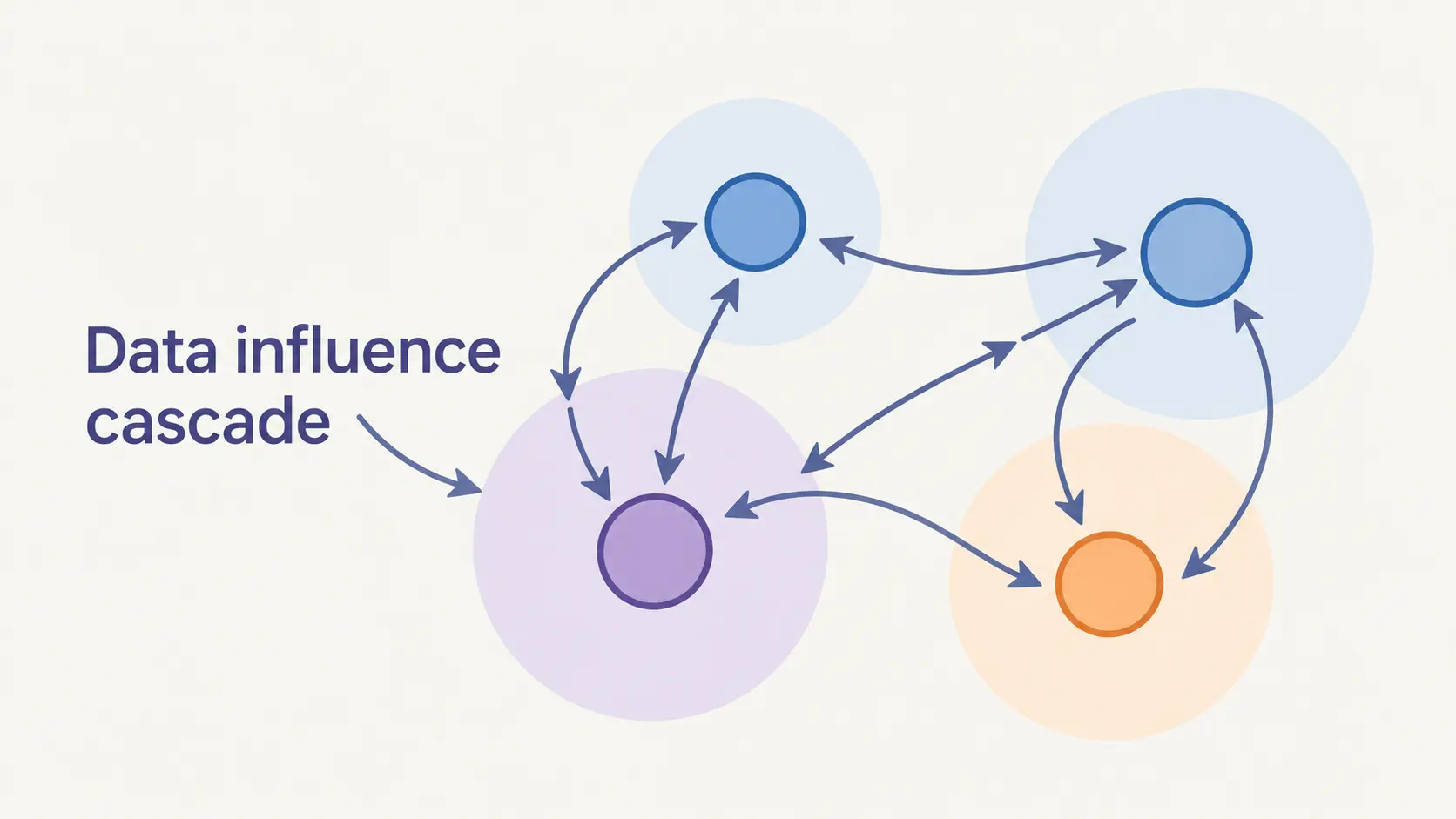
02ICLR 2025
We study how data influence propagates in decentralized learning and reveal a cascade effect that shapes training dynamics.
03ICML 2023
We show that decentralized SGD and average-direction SAM are asymptotically equivalent, providing a unified understanding of their implicit regularization.
Our paper “On the Surprising Effectiveness of a Single Global Merging in Decentralized Learning” has been accepted to ICLR 2026 (Oral Presentation, Top 1.2%).
Gave a talk at the Conference on Scientific Machine Learning (CSML 2025).
Our DICE paper was accepted to ICLR 2025.
Outside of research, I enjoy drawing and basketball. They help me stay curious and balanced.